
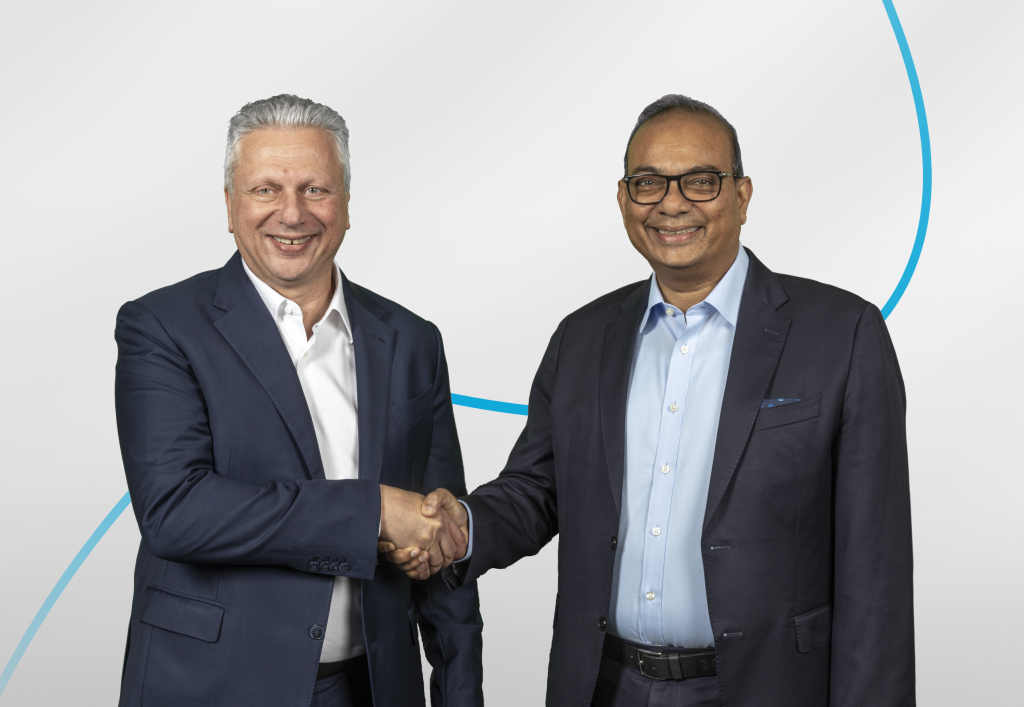

Capgemini-WNS Acquisition: The global business and technology landscape has undergone a seismic shift. The outsourcing industry, once synonymous with cost-cutting and labor arbitrage, is now racing toward a new frontier: delivering technology-driven, value-centric outcomes. In one of the most significant strategic moves of 2025, French technology consulting giant Capgemini is set to acquire global Business Process Management (BPM) leader WNS Holdings for $3.3 billion in an all-cash deal.
This isn’t just another corporate merger. It represents a fundamental strategic pivot towards what Capgemini terms “Agentic AI-powered Intelligent Operations.” The recent sanctioning of this acquisition by the Royal Court of Jersey, where WNS is incorporated, was the final crucial step, paving the way for an expected completion by late October 2025.
This article provides a comprehensive analysis of this landmark deal, unpacking the strategic motivations, the mechanics of the acquisition, and the profound implications for the entire industry.
The Strategic “Why”: Why WNS for Capgemini
To understand the future, we must first look at the past. WNS boasts a rich history, beginning in 1996 as an in-house unit for British Airways before evolving into a top-tier, independent BPM player. The company’s value lies in its formidable, deep-rooted assets:
- Deep Domain Expertise: WNS has built a reputation for its specialized knowledge across high-value industries like Banking and Financial Services, Insurance, Travel and Leisure, and Healthcare and Life Sciences.
- Impressive Scale: With over 66,000 employees, 65 delivery centers worldwide, and a portfolio of more than 700 corporate clients, WNS offers immediate scale and a resilient, high-margin business.
- Technological Prowess: Recognizing the industry’s direction, WNS has been aggressively investing in its digital arm, a strategy accelerated by its own acquisition of the AI-focused firm Kipi.ai earlier in 2025.
From Capgemini’s perspective, WNS was the perfect vehicle to accelerate its ambitions in an AI-first world. While Capgemini possesses world-class technology consulting and IT services, it needed to rapidly scale its process-centric, industry-specific execution capabilities, particularly in the lucrative North American market. WNS fills this gap perfectly, creating a symbiotic relationship between high-level strategy and ground-level operations.
The Core Driver: The Shift to Agentic AI-Powered Intelligent Operations
The driving force behind this acquisition is the industry’s evolution beyond simple automation. The future lies in creating intelligent, autonomous operations where AI agents can manage complex, end-to-end business functions with minimal human intervention.
This vision of “Agentic AI-powered Intelligent Operations” is the central bet Capgemini is making. Let’s break down what this means in practice:
- Combining Brain and Brawn: Capgemini brings the “brain”—sophisticated AI platforms, cloud infrastructure, and technology strategy. WNS provides the “brawn”—deep, documented process knowledge and a global execution engine. Together, they can offer a fully integrated solution for reinventing a client’s back office.
- The Rise of “Services-as-Software”: As highlighted by industry analysts like HFS Research CEO Phil Fersht, we are moving towards a model where AI-powered platforms deliver services autonomously, much like software. WNS’s operational foundation provides the perfect testing ground and scale for Capgemini to embed and refine its proprietary AI technologies.
- Unlocking New Value: This partnership moves the client conversation beyond cost savings. The focus shifts to driving superior business outcomes, enhancing organizational agility, and even creating new revenue streams through data-driven insights and hyper-efficient operations.
The Nuts and Bolts of the $3.3 Billion Deal
For a comprehensive understanding, it’s essential to examine the key elements that structured this historic transaction.
Transaction Structure and Financing
- Mechanism: The acquisition was executed via a Scheme of Arrangement under Jersey law, a legal process requiring approval from shareholders and the court.
- Valuation: Capgemini agreed to pay $76.50 per share in cash, representing a 17% premium over WNS’s share price before the announcement. The total enterprise value is approximately $3.3 billion, plus the assumption of WNS’s net debt.
- Financing: To fund the purchase, Capgemini secured €4.0 billion in bridge financing.
Key Milestones to Completion
- July 7, 2025: Capgemini and WNS announce a definitive transaction agreement.
- August 29, 2025: WNS shareholders give overwhelming approval, with nearly 99.9% of votes in favor.
- September 17, 2025: All necessary antitrust and regulatory approvals are secured.
- October 9, 2025: The Royal Court of Jersey sanctions the scheme, the final major regulatory hurdle.
- October 17, 2025: The expected closing date, when the court order is filed with the Jersey registrar.
WNS Acquisition by Capgemini Sanctioned by Royal Court of Jersey#Acquisition #Capgemini #CapgeminiSE#Shareholders #WNS #WNSHoldingsLimited#businesstransformation @wnsholdingshttps://t.co/oKdV7sE9P1 pic.twitter.com/mZxm2aHck2
— Business Wire India (@BWIndia) October 10, 2025
Potential Challenges and Risks
No merger of this scale is without its hurdles. Key risks identified by market analysts include:
- Integration Complexity: Successfully merging two global giants with different corporate cultures—Capgemini’s European-led consulting model and WNS’s India-led operational focus—will be a monumental task. Harmonizing AI platforms and avoiding “integration fatigue” among employees is critical.
- Market Volatility: The deal is occurring amidst a volatile macroeconomic climate and breakneck AI innovation. The merged entity must remain agile to adapt and quickly demonstrate the promised synergies.
- Justifying the Premium: Capgemini paid a significant premium for WNS, placing immediate pressure on management to deliver on projected revenue growth and cost synergies to validate the valuation.
Broader Market Implications: Reshaping the IT and BPM Landscape
The Capgemini-WNS deal is a bellwether for the entire industry, signaling several key trends:
- A Wave of Consolidation: This acquisition will likely trigger further M&A activity as technology-centric firms seek to acquire process-driven BPM companies to build their own end-to-end offerings.
- A Direct Challenge to the Big Four: By combining deep technology prowess with robust operational expertise, Capgemini is positioning itself to compete more directly with the Big Four consulting firms (Deloitte, PwC, EY, and KPMG) for large-scale transformation projects.
- The End of Traditional BPO: The transaction definitively signals that the era of simple, labor-based Business Process Outsourcing (BPO) is over. Future success hinges on the seamless integration of digital transformation, data analytics, and AI.
What This Means for Clients
For existing and potential clients of both companies, this merger creates a compelling new value proposition:
- End-to-End Services: Capgemini’s clients gain access to WNS’s industry-specific BPM solutions, while WNS’s clients can tap into Capgemini’s advanced AI and technology services.
- Enhanced AI Capabilities: Clients will benefit from a more mature and scalable offering in Agentic AI-powered solutions, promising not just efficiency but true operational intelligence and smarter decision-making.
- Expanded Geographic Reach: WNS’s strong presence in North America and the UK significantly bolsters Capgemini’s market access and delivery capabilities in these critical regions.
Conclusion: The Path Forward for Intelligent Operations
As the October 2025 closing date approaches, the business world will be watching Capgemini’s integration execution with keen interest. The success of this $3.3 billion bet will not only define the future trajectory of both companies but will also serve as a high-profile case study for how established tech and services firms can evolve in the age of AI.
The Capgemini-WNS acquisition is more than a transaction; it is a strategic declaration. It aims to redefine the ceiling of what’s possible in business process services and set a new, higher standard for AI-driven transformation and Intelligent Operations on a global scale.
Visit https://inworldnews.com/ for more