
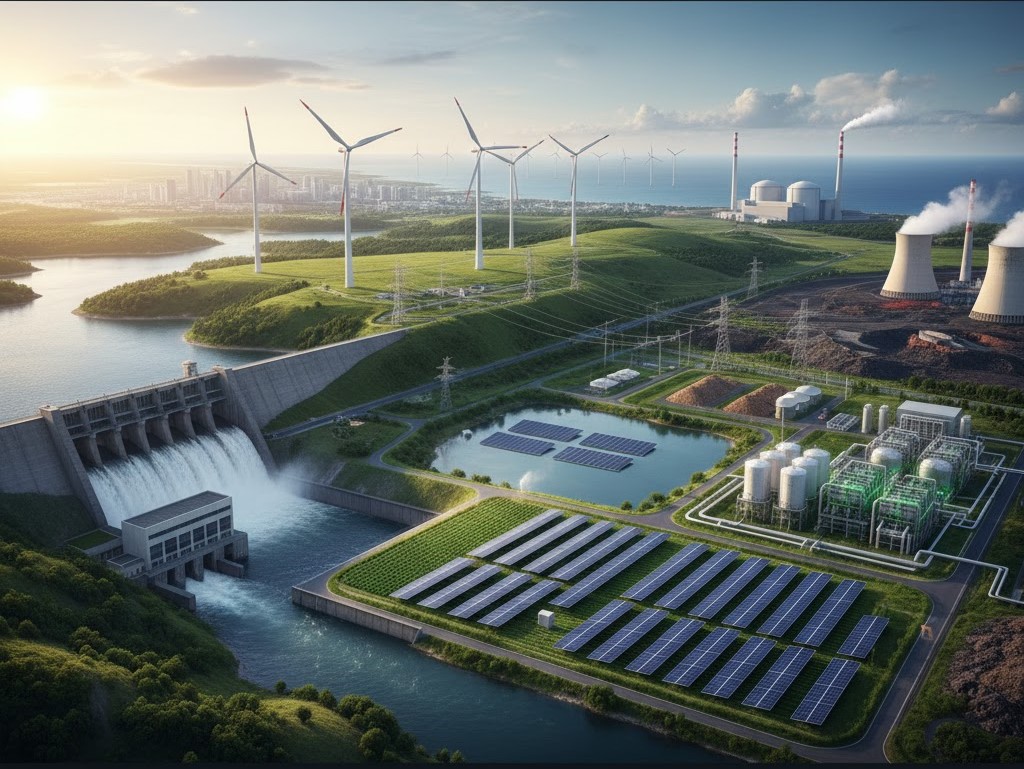
Gist – The clean energy sector, encompassing renewable sources like solar, wind, and hydropower as well as nuclear energy, is rapidly expanding due to global efforts to combat climate change and enhance energy security. This growth is fueled by plummeting costs, technological innovations in storage and smart grids, and significant corporate demand. However, the industry must overcome key challenges such as the intermittency of solar and wind, the need for massive grid upgrades, complex land-use issues, and fragile supply chains for critical minerals to fully realize its potential and complete the transition away from fossil fuels.
The global energy landscape is undergoing a seismic shift. Driven by the urgent need to address climate change, enhance energy security, and foster sustainable economic growth, the clean energy sector has emerged from the periphery to become a central pillar of the world’s industrial and environmental strategy. This sector encompasses power generation and technologies that produce zero or low greenhouse gas emissions, offering a viable and increasingly affordable alternative to fossil fuels.
At its core, clean energy is a broad and dynamic field. It includes renewable sources like solar, wind, and hydropower, which draw from naturally replenishing resources, as well as nuclear energy, which, while not renewable, is a critical clean baseload power source due to its minimal operational emissions.
The Clean Energy Toolkit: Key Sub-Segments
The transition to a cleaner future is being powered by a diverse portfolio of technologies, each with its unique strengths.
- Solar Energy: By converting sunlight into electricity via photovoltaic (PV) cells or into thermal energy for heating, solar power is a cornerstone of the energy transition. Innovations like floating solar on reservoirs and agrivoltaics—which combines solar farming with agriculture—are maximizing efficiency and solving land-use challenges.
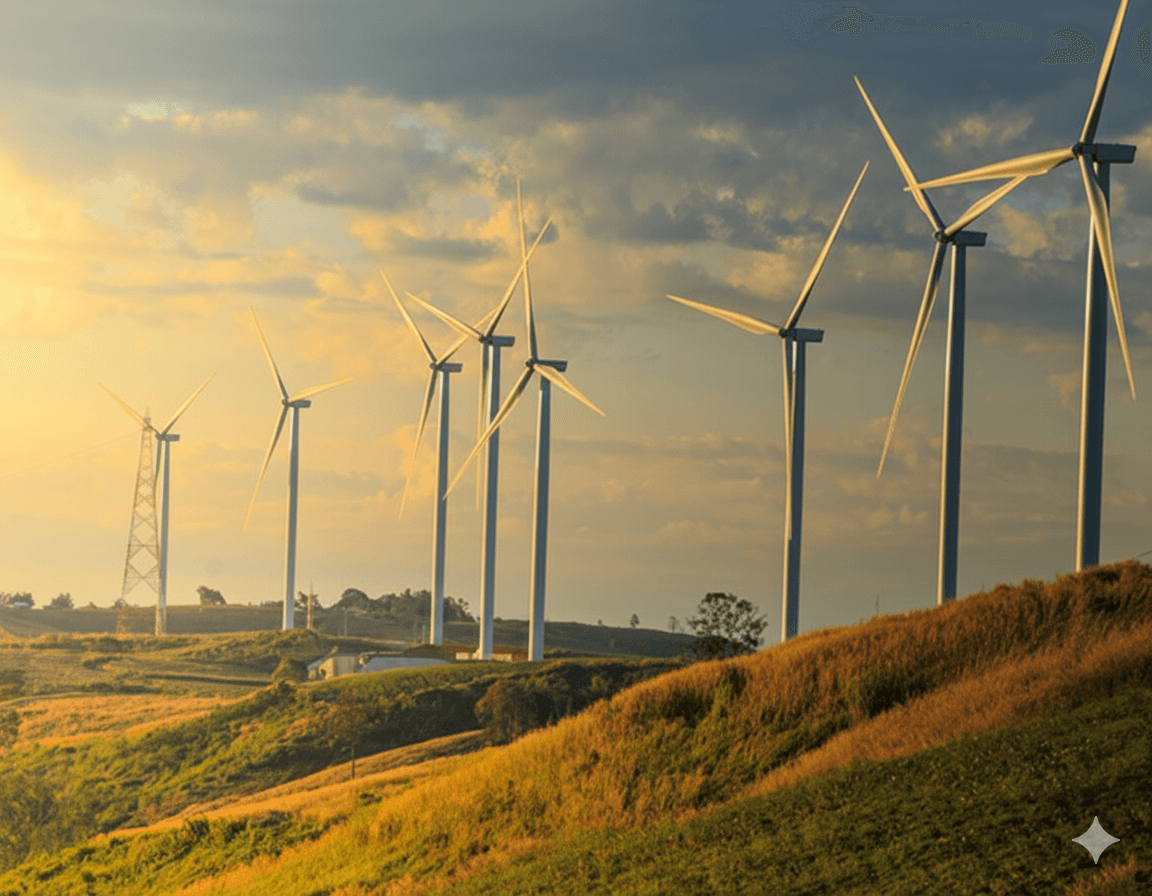
- Wind Power: Harnessing the kinetic energy of wind through massive turbines, this segment includes both onshore and offshore farms. Offshore wind, in particular, is a rapidly growing area, capitalizing on stronger, more consistent winds over the ocean to generate vast amounts of electricity.
- Hydropower: As one of the oldest and most reliable sources of clean electricity, hydropower uses the flow of water through dams or run-of-the-river projects. Its ability to provide stable, dispatchable power makes it an ideal complement to more variable sources like solar and wind.
- Geothermal Energy: This often-untapped resource utilizes the Earth’s immense internal heat for electricity generation or direct heating and cooling via ground-source heat pumps, offering a constant and reliable power supply.
- Bioenergy: Derived from organic matter like wood waste and agricultural residues, bioenergy can be burned for heat or converted into liquid biofuels for transportation, providing a path to decarbonize sectors that are difficult to electrify.
- Green Hydrogen: Produced using renewable electricity to split water molecules, green hydrogen is a versatile, emissions-free fuel. It is poised to play a pivotal role in decarbonizing heavy industries like steel and cement manufacturing and long-haul transportation.
- Nuclear Energy: Nuclear power plants generate electricity through fission, producing massive amounts of reliable, baseload power with virtually no air pollution during operation, making them a key partner for variable renewables in a balanced clean energy grid.
Industry Trends and Innovations Fueling Growth
The clean energy sector is characterized by rapid technological advancement and evolving market dynamics.
- Plummeting Costs: The economics of clean energy have flipped. The cost of generating electricity from solar and wind has fallen dramatically, now making them the most affordable power sources in many parts of the world.
- Advanced Energy Storage: The intermittency of solar and wind is being solved by breakthroughs in battery technology. Battery Energy Storage Systems (BESS), including next-generation solid-state and flow batteries, are crucial for storing excess energy and releasing it when needed, ensuring grid stability.
- Smart Grid Integration: Aging power grids are being upgraded with digital technology. Smart grids enable real-time monitoring and demand response, efficiently managing the flow of variable renewable energy and creating a more resilient and flexible system.
- The Rise of Decentralization: Energy generation is becoming more localized. Small-scale wind turbines and residential solar panels, often paired with home batteries, are empowering communities and increasing energy independence, especially in remote areas.
- Corporate Demand: The private sector is a major driver of growth. Ambitious corporate sustainability goals and Power Purchase Agreements (PPAs), where companies directly buy clean power, are catalyzing massive investments in new projects.
Navigating Key Challenges
Despite its promise, the path to a clean energy future is not without obstacles.
- Intermittency and Grid Infrastructure: The variable nature of sun and wind requires a fundamental overhaul of our power grids to balance supply and demand effectively.
- Land Use and Public Acceptance: Large-scale projects can face “Not In My Backyard” (NIMBY) opposition and raise concerns about wildlife and habitat disruption, making land acquisition and permitting complex.
- Raw Material Supply Chains: The manufacturing of solar panels, batteries, and wind turbines depends on a supply of critical minerals. Geopolitical concentration of these resources poses a risk to the stability and security of the supply chain.
- Financial and Regulatory Hurdles: High upfront capital costs and inconsistent government policies can deter investment. Streamlining slow and complex permitting processes is essential to accelerate development.
Major Companies Leading the Charge
The clean energy sector is supported by a mix of international giants and regional champions.
Globally, companies like NextEra Energy (U.S.), the world’s largest wind and solar producer, and Vestas Wind Systems (Denmark), a leading turbine manufacturer, are setting the pace. Iberdrola (Spain) is a multinational utility aggressively expanding its renewable portfolio, while GE Vernova (U.S.) provides critical technology solutions.
In India, Adani Green Energy and Tata Power are driving the nation’s ambitious renewable targets, with NTPC Renewable Energy fast emerging as a major player. From China, firms like Longi Green Energy Technology, a solar manufacturing leader, and Sungrow Power Supply, a top inverter and storage provider, are central to the global clean energy supply chain.
Government of india schemes to promote Clean Energy Sector
The Government of India promotes the clean energy sector through a comprehensive set of schemes that target renewable sources like solar, wind, hydro, and bioenergy. These initiatives focus on boosting domestic manufacturing, encouraging consumer adoption, and developing large-scale infrastructure
Solar energy schemes
PM Surya Ghar: Muft Bijli Yojana
- Purpose: To provide free electricity to households by promoting the installation of rooftop solar panels.
- Key features:
- Subsidies of up to 40% of the installation cost for residential consumers.
- Offers free electricity for up to 300 units per month and allows households to sell excess power back to the grid.
- Includes a national portal for simplified registration, subsidy applications, and vendor selection.
- Provides access to low-interest bank loans for residential systems.
Visit : PM Surya Ghar: Muft Bijli Yojana here
PM-KUSUM Scheme
- Purpose: To empower farmers by “de-dieselizing” the agriculture sector and increasing their income.
- Key components:
- Component A: Supports farmers in setting up small-scale, grid-connected solar power plants on barren land.
- Component B: Provides subsidies for installing standalone solar-powered irrigation pumps.
- Component C: Helps individual farmers solarize their existing grid-connected agricultural pumps.
Visit : PM-KUSUM Scheme here
Solar Parks Scheme
- Purpose: To facilitate the rapid and large-scale installation of grid-connected solar projects by developing dedicated infrastructure.
- Key features:
- The scheme develops “ultra-mega” solar parks with ready infrastructure like land, roads, and transmission systems.
- It provides financial assistance for project developers to cover development and grid-connectivity costs.
- Several of the world’s largest solar parks have been developed under this scheme, including Bhadla Solar Park in Rajasthan.
Visit : Government Of India Solar Parks Scheme here
Production Linked Incentive (PLI) Scheme for Solar PV Modules
- Purpose: To boost domestic manufacturing of high-efficiency solar photovoltaic (PV) modules and reduce import dependency.
- Key features:
- Provides financial incentives to manufacturers for five years following the commissioning of their plants.
- Incentivizes integrated plants that cover multiple stages of the manufacturing process.
- Aims to attract investment, create jobs, and build a local supply chain for solar components.
Visit : Government of India’s Production Linked Incentive (PLI) Scheme for Solar PV Modules here
Bioenergy schemes
National Bioenergy Programme
- Purpose: To promote the use of biomass and waste materials for energy generation.
- Key sub-schemes:
- Waste to Energy Programme: Supports projects that produce biogas, bio-CNG, and power from urban, agricultural, and industrial waste.
- Biomass Programme: Provides financial assistance for manufacturing briquettes and pellets, and for biomass-based cogeneration in industries.
- Biogas Programme: Promotes the installation of small to medium-sized biogas plants in rural areas.
Visit : Government of India’s National Bioenergy Programme here
Ethanol Blended Petrol (EBP) Programme
- Purpose: To promote the use of biofuels by blending ethanol with petrol, which helps reduce crude oil imports and carbon emissions.
- Key features:
- Includes an administered price mechanism for procuring ethanol.
- Supports the “Pradhan Mantri JI-VAN Yojana,” which provides financial support for integrated bio-ethanol projects using lignocellulosic biomass.
Visit : Government of India’s Ethanol Blended Petrol (EBP) Programme PIB Press release here
Other renewable energy schemes
National Green Hydrogen Mission
- Purpose: To establish India as a global leader in the production, usage, and export of green hydrogen and its derivatives.
- Key components:
- Strategic Interventions for Green Hydrogen Transition (SIGHT): Provides financial incentives for manufacturing electrolyzers and producing green hydrogen.
- Promotes pilot projects in hard-to-abate sectors like steel and shipping.
- Develops Green Hydrogen Hubs to support large-scale production and infrastructure.
Visit : Government of India’s National Green Hydrogen Mission here
National Offshore Wind Energy Policy
- Purpose: To develop offshore wind power capacity within India’s exclusive economic zone.
- Key features:
- The National Institute of Wind Energy (NIWE) acts as the nodal agency for the development of offshore wind energy.
- Provides a framework for leasing the seabed and offers fiscal incentives to investors.
Visit : Government of India’s National Offshore Wind Energy Policy here
Small Hydro Power (SHP) Promotion
- Purpose: To encourage the development of small hydropower projects with capacities up to 25 MW.
- Key features:
- The Ministry of New and Renewable Energy (MNRE) provides financial support for resource assessment and preparation of Detailed Project Reports (DPRs).
- Historically, it has facilitated both public and private sector participation in SHP projects.
Visit : Government of India’s Small Hydro Power (SHP) Promotion here
The Path Forward
The clean energy transition is no longer a niche ambition but a global industrial reality. While challenges remain, the convergence of technological innovation, falling costs, and strong political and corporate will is creating unstoppable momentum. By continuing to invest in grid modernization, resilient supply chains, and supportive policies, we can unlock the full potential of clean energy, powering a sustainable, secure, and prosperous future for all.
How it is beneficial for Businesses
Here are ways businesses can benefit from the Government of India’s clean energy schemes, framed from a business perspective.
For manufacturers and suppliers
- Production Linked Incentive (PLI) Scheme: This scheme offers a direct financial incentive to domestic manufacturers of high-efficiency solar PV modules, making it profitable to scale up operations in India.
- Financial gain: Receive cash benefits based on increased manufacturing and sales.
- Reduced import dependence: Tap into a growing domestic and global market for “Made in India” solar products.
- Technological edge: The scheme favors manufacturers adopting advanced technology, pushing them to innovate and improve product quality.
- National Bioenergy Programme: Businesses can get financial assistance to establish plants for biomass processing.
- New revenue streams: Produce and sell pellets and briquettes as an alternative fuel for industries or generate power from waste.
- Resource utilization: Access and convert abundant agricultural residue and other biowaste into a valuable resource.
- National Green Hydrogen Mission: This initiative offers incentives for manufacturing electrolyzers and producing green hydrogen.
- First-mover advantage: Position your company as a leader in a sunrise sector with immense global potential.
- Research and development support: The Strategic Hydrogen Innovation Partnership (SHIP) facilitates R&D efforts, helping businesses develop competitive technologies.
- National Offshore Wind Energy Policy: Companies with expertise in offshore surveys and infrastructure development can participate in this emerging sector.
- New business avenues: Bid for seabed leases, construct and operate offshore wind projects, or provide specialized equipment and services.
- Long-term contracts: Benefit from supportive power offtake mechanisms, such as long-term power purchase agreements (PPAs), reducing market uncertainty.
For energy producers and service providers
- PM-KUSUM Scheme (Component A): A business or a third-party developer can lease land from a farmer to set up a small-scale, grid-connected solar power plant.
- Steady income: Earn a recurring income by selling solar power to the local Distribution Company (DISCOM) at a fixed tariff.
- Guaranteed revenue: The MNRE provides a purchase-based incentive to DISCOMs, ensuring a secure and reliable revenue stream for the initial five years.
- Solar Parks Scheme: Companies specializing in renewable energy infrastructure can bid for projects to develop ultra-mega solar parks.
- Large-scale projects: Participate in large-scale solar projects with pre-identified land and transmission infrastructure, reducing development risks.
- Small Hydro Power (SHP) Promotion: Private sector developers can invest in and develop small hydropower projects, which require less upfront investment than large hydro projects.
- Lower environmental risk: Benefit from a faster and less complex approval process compared to large-scale hydro projects.
- Stable energy source: Gain from a reliable, continuous power source for grid balancing.
For Industrial and Commercial consumers
- Carbon Credit Trading Scheme: Companies that successfully reduce their emissions below a set baseline can generate carbon credits and sell them to entities that exceed their limits.
- Financial incentive: Monetize emission reductions, creating a new revenue stream and boosting your company’s green credentials.
- Ethanol Blended Petrol (EBP) Programme: Sugar and grain-based businesses can produce ethanol and sell it to Oil Marketing Companies (OMCs).
- Government-backed market: Benefit from a consistent and growing government-backed demand for ethanol blending in petrol.
- Access to subsidies: Take advantage of interest subvention and other government incentives to set up or expand ethanol production facilities.
- National Bioenergy Programme (Waste to Energy): Industries with high-volume biowaste can set up their own bioenergy plants to reduce energy costs.
- Reduced operational costs: Use your own waste to generate power, biogas, or Bio-Compressed Natural Gas (Bio-CNG), reducing your reliance on costly and polluting fossil fuels.
- Green Energy Open Access Rules: This policy allows businesses to procure clean energy directly from renewable energy generators through an open access system, bypassing expensive grid tariffs.
- Lower energy costs: Secure long-term power at a lower, more predictable cost.
- Corporate sustainability: Enhance your brand image by demonstrating a commitment to using green energy.
Visit https://inworldnews.com/ for more