
Table of Contents
An Unfortunate Incident at Citizens Bank Park
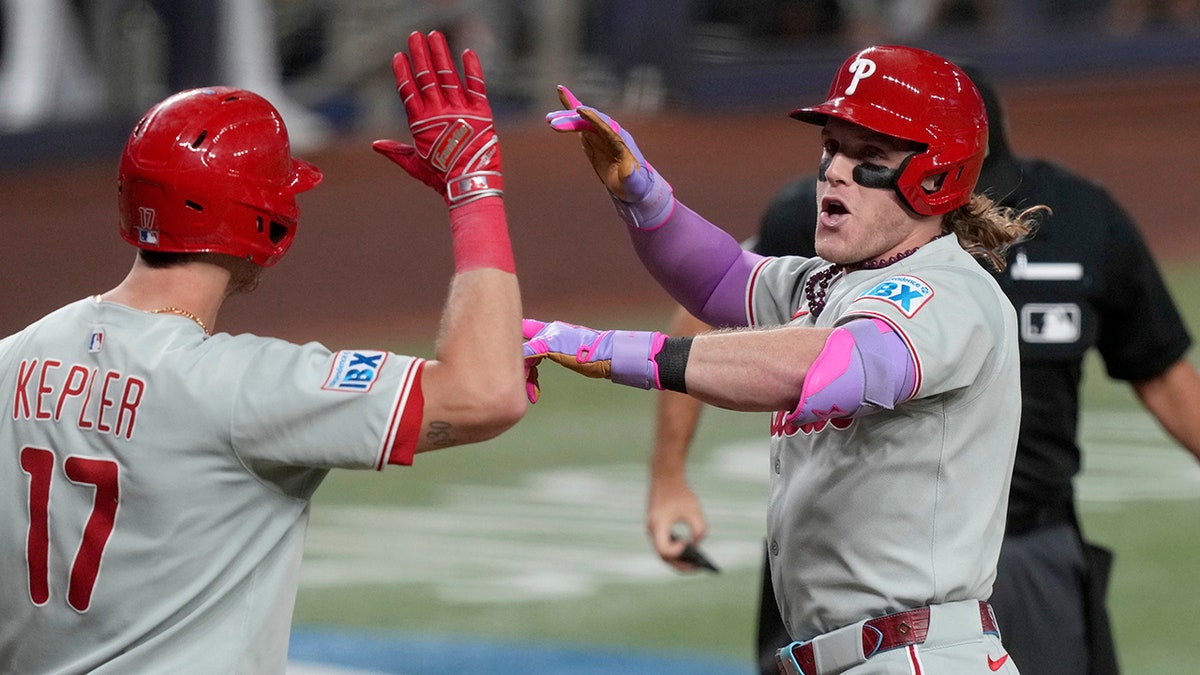
During a Friday night matchup between the Philadelphia Phillies and the Miami Marlins, an event unfolded that would capture national attention far beyond the game’s final score. In the fourth inning, Phillies center fielder Harrison Bader connected powerfully with a pitch, sending a solo home run ball soaring into the left field stands at Citizens Bank Park. What should have been a moment of pure, unscripted joy—a hallmark of the live baseball experience—quickly turned contentious.
As is tradition, fans in the section scrambled for the prized souvenir. A father, attending the game with his young son, successfully retrieved the Harrison Bader home run ball and promptly placed it into his child’s glove. The boy’s elation, however, was short-lived. Another fan, a woman also clad in Phillies attire, approached them. Videos from multiple angles show a heated exchange, with the woman emphatically stating, “You took it from me,” and repeating, “That was in my hands.” In a move that many viewers would later describe as an effort to de-escalate the situation for the sake of his child, the father retrieved the ball from his son’s glove and handed it to the woman, who then departed. This brief interaction, witnessed by dozens and recorded on smartphones, set the stage for a much larger public conversation about decorum, entitlement, and protecting childhood innocence at public events.
The Viral Response and Public Outcry
The power of social media was on full display almost immediately after the incident. Clips of the encounter, often tagged with terms like “Phillies Karen” and “baseball Karen,” spread rapidly across platforms like Twitter, TikTok, and Instagram. The court of public opinion reacted with swift and overwhelming support for the young fan and his father. The consensus was clear: an adult had prioritized a souvenir over a child’s experience, violating an unwritten rule of fan etiquette that resonates deeply with sports enthusiasts—a child who gets a ball gets to keep it.
The story transcended typical sports news. It was picked up by national outlets, turning a local incident into a topic of widespread discussion. The woman involved was later identified in public reports as Cheryl Richardson-Wagner, leading to significant online scrutiny and debate about the nature of public shaming in the digital age. The incident also drew commentary from public figures, including entrepreneur and television personality Marcus Lemonis, who echoed the sentiments of many by expressing support for the young Phillies fan. The collective outcry was not merely about criticism; it was a unified call for accountability and a longing for a more positive resolution to the story.
A Positive Outcome: The Power of Community
In a beautiful twist, the narrative did not end with a viral video of a disappointed child. The story’s heart lies in what happened next. The Philadelphia Phillies organization, renowned for its deep connection to the city and its fans, became aware of the escalating situation. Demonstrating exceptional class and a commitment to their supporters, the team’s management intervened to ensure the young boy’s experience was redeemed.
Following the game, the organization arranged for the young fan and his family to meet Harrison Bader himself. The Phillies player, who had hit the controversial home run, took time to speak with the boy, pose for photos, and, most importantly, ensure he received not one but several official MLB baseballs. This act of kindness transformed a potentially scarring memory into an unforgettable, positive one. Instead of recalling the night a ball was taken from him, the boy will remember the night he met a professional athlete who went out of his way to show him compassion. The team’s response highlighted the best of what a sports community can be: supportive, protective of its youngest members, and dedicated to righting a wrong.
Reflecting on the Bigger Picture
The “Phillies Karen” incident serves as a modern parable, reflecting broader societal themes. It underscores the immense power and double-edged nature of viral fame. Social media can rapidly mobilize public sentiment to champion a cause, as it did for the young fan, ensuring his story was heard and addressed. However, it also demonstrates the potential for intense and often disproportionate backlash against individuals caught in the public eye, a phenomenon that requires careful and empathetic consideration.
The episode also prompts a discussion about behavior in public spaces. Sporting events are communal activities, shared experiences built on a foundation of mutual respect and shared passion. This incident reminded millions of the importance of sportsmanship not just among athletes on the field, but among fans in the stands. It reinforced the idea that our actions, especially in front of children, have impact and that choosing kindness and understanding is always the superior path. The focus keyword throughout this event remains compassion—a value that ultimately prevailed.
Lessons in Kindness and Moving Forward
The journey from a disputed baseball to a meeting with a MLB player offers several valuable lessons. Firstly, it reaffirms the strength of community. The collective voice of thousands of strangers, united by a sense of fairness, played a direct role in orchestrating a happy ending. It proves that negativity can be countered and overwhelmed by a concerted push for positivity and resolution.
Secondly, the response from the Phillies organization provides a blueprint for how institutions can positively engage with public discourse. By listening to their fanbase and acting with generosity and speed, they turned a public relations challenge into a demonstration of their core values. They showed that they are more than just a baseball team; they are a pillar of the community.
Finally, for the rest of us, the story is a touchstone. It’s a reminder to be mindful of our behavior in public, to prioritize empathy over contention, and to always look out for the most vulnerable among us, especially children. In a world that can sometimes feel divided, a simple act of kindness—whether from a father protecting his son’s moment, a team rectifying a wrong, or a player taking extra time for a fan—can create a ripple effect of goodwill that is far more powerful than any single negative event.
Visit https://inworldnews.com/ for more.